
The Knuckleball: Hard to Throw. Hard to Hit – Pro Batter Sports
Not every difficult pitch in baseball relies on speed. The knuckleball pitch is one of the hardest pitches to face in baseball; it cannot be predicted, and therefore, it remains one of the most challenging types of pitches for any pitcher and hitter in baseball.
In order to get acquainted with this type of ball pitch, it is essential to take into consideration movement and control.
What Is a Knuckleball?
A knuckleball is a pitch thrown with little to no spin, which causes it to move unpredictably through the air. Unlike fastballs or breaking pitches, its path isn’t smooth or consistent.
Key characteristics include:
- Slower speed compared to most pitches
- Erratic, shifting movement
- Ability to change direction mid-flight
The most important distinction? Spin doesn’t control the knuckleball; airflow does.
Why the Knuckleball Has Such a Weird Movement Pattern
Due to a lack of spin, the ball tends to be very unstable in flight. The stitches behave erratically against the atmosphere, and the ball may zigzag or even move side-to-side before reaching the batter.
The erratic pattern of movement is what gives the knuckleball its uniqueness. It is difficult to control, even for the pitcher himself.
Why It’s Hard to Throw
Throwing a knuckleball effectively requires extreme precision. Pitchers must:
- Use a very specific grip
- Release the ball with minimal spin
- Maintain consistent mechanics
However, the issue here is that any minor mistake may result in an out-of-control delivery. It is very difficult to deliver strikes every time, which is why only a few pitchers have mastered the art of doing so. The fact that the knuckleball receives little attention in coaching further contributes to its rarity.
Why It’s Hard to Hit
For batters, this poses an entirely different challenge.
First, the movement is unpredictable. The ball doesn’t follow a defined path like a slider or curveball. Second, it disrupts timing. Hitters are trained to read trajectory early, but the knuckleball doesn’t allow for that.
It looks and may be perceived as slow-moving and hittable until it moves at the last moment. This makes batters make bad decisions and miss solid contact. Opposed to fastballs, they cannot commit to swinging early and succeed.
Why Catchers Find it Difficult
Knuckleballs are also problematic for catchers. Because of an unpredictable trajectory, they have to constantly adjust their position and sometimes even use special catcher gloves.
How Hitters Should Train for Knuckleballs
To improve against knuckleballs, hitters need to train differently. The focus should be on:
- Reaction time
- Tracking the ball late
- Maintaining balance longer
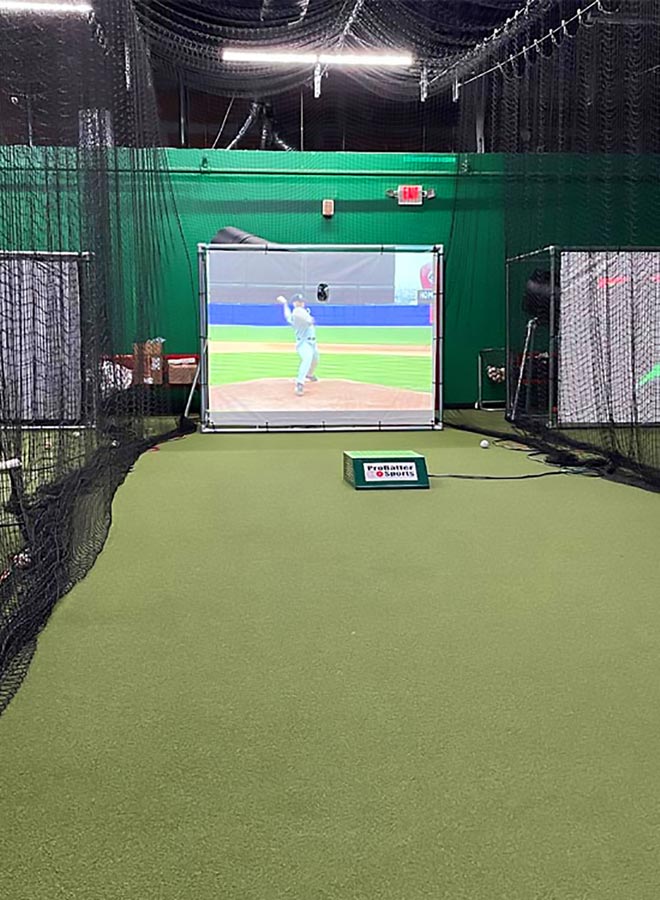
By using a video pitching machine or by having baseball pitch simulators, athletes will be able to encounter pitch movements that are much more realistic compared to what can be provided by regular pitching machines.
The video pitching machine will help the player experience the use of different pitches and learn how to adjust instead of predicting the pitch movements.
Strategic Insight for Hitters
When facing a knuckleball:
- Stay back longer
- Focus on making contact, not hitting for power
- Avoid overcommitting early
These adjustments help hitters stay flexible and react to late movement.
Final Takeaway
The knuckleball can be hard to master since it eliminates any element of certainty. The ball’s random path is a real challenge for even the most skilled athletes.
Knowing how it functions is simply the first step toward success. To truly excel at hitting it, athletes must train in an environment where their performance is uncertain.


